03 April 2020

Overture to the Book of Romans

The Book of Romans: A Bible study series in 16 parts
Chapter One
By Bob Mendelsohn
Given in Sydney Australia
Beginning April 2020
The outline of J Vernon McGee influenced me

1.
Salutation: Paul the slave 
2.
Sin: What it is (First, the bad news)
3.
Salvation: How to get it (Then the good news)
4.
Sanctification:God makes us right with him
5.
Struggle with self and with Torah
6.
Spirit-filled living: Alive each day in him
7.
Security: Assurance of being his
8.
Sovereign God of Israel
9.
Sacrifice & service: Living for him
10.
Separation and priesting/serving each other
11.
Salutation and farewells

Lesson One: Salutation: Paul, the slave (1.1-17)

Paul introduces himself in an unusual way. He had probably never been to Rome, though he always wanted to get there. He is known as the apostle, but his self-description before anything else is bond-servant. Servant, like Yeshua, (Isaiah 49.6) who lives to serve others. 
The first part of chapter one introduces many themes which Paul will unpack as we trudge this analytical book together over the next few months while in lockdown. It’s like the opening movement of a Haydn symphony. It’s the overture that introduces the rest of the Broadway show. We will see themes of the nature of the Messiah, the fulfillment of biblical prophecy, the role of the Jews and the Gentiles and those who proclaim to them, obedience and grace. The purposes of faith… it’s all in this book. Stay with us; that’s what an overture announces. Like the announcer at ringside or on the television late-night show, telling us who is on the program; there’s more to come. 

As we begin our study of this landmark book, may we find what Augustine found? One day, the story goes, he was weeping under a fig tree, in distress of soul, desperately convicted of his own sin. He heard a child walking by who was singing this phrase, “Take up and read.” He turned to Paul’s writings lying nearby and read Romans 13.13-14 “let us walk properly…put on Jesus, and make no provision for the flesh to fulfill its lusts.” He believed and obeyed, and God set him on a forever journey to influence thinkers for centuries. 

Remember it was Martin Luther who was teaching a series of lessons from Romans and was seriously converted. He said he “felt myself to be reborn and to have gone through open doors into paradise. “ He was liberated by what he titled “the righteousness by which through grace and sheer mercy God justified us through faith.” 

Turn with me to verse 1 and let’s read together.

READING. (Text below at the endnotes)

Overture (1-7)

Paul starts with his introduction and then interrupts himself to boast in the Gospel. That’s consistent with his behavior throughout his life. He titles himself both servant, doulos, the lowest of the social classes to the power brokers of his day the Romans. It would be like saying “I’m a domestic from Soweto among the powerful in Johannesburg” Or to say you are from Villawood Detention Centre to the saints in Canberra. Lowly don’t speak to those above them, much less the most exalted. But Paul did. And so can you. If you don’t boast like we would expect “Paul, a Roman citizen, and apostle”. That carries a sentiment of boasting and pride. Paul is saying, I’m not worthy, and God called me. Thus I have to carry on, no matter the cost, even to you!”
Today we might use the term ‘apostle’ to mean a grand leader, a holy man, the top of the food chain, but Paul was indicating something else. He meant one who was summoned and sent. No matter the cost. Apostleship in Romans is nothing about which to boast; it’s the caller, not the called, who is in view. Thus he’s the servant-apostle. Set apart for the good news.
Set apart sounds like Jeremiah (1.5) and Isaiah (49.1). It’s not the prophet who is in view; it’s the Caller. 
Verse two shows us why we love Paul so much. He interrupts his own introduction to boast in the Gospel and to show it as the same message God has been communicating since the beginning. It’s nothing he invented; it’s the prophetic historic Old Testament teaching about this one. 
Verses three and four: Showing both the total humanity of Yeshua and the divine nature of the Son of David and the Son of God. That argument persists in these days among the yet-unconvinced, but Paul was not in doubt. Yeshua was totally human and totally divine. The word ‘descendant’ is the Greek word ‘sperma’. Don’t read that as something sexual, but as showing the nature of man was in the human Jesus. 
And when was Yeshua declared “Son of God?” At the resurrection. That fact is going to continue to highlight itself in all of Paul’s letters. It’s the fulcrum of salvation history. We will see it again and again That doesn’t mean he began being divine then, but that it was trumpeted again then. 
Now this idea of the divine messiah is not new to Paul. The royal messiah seems clear in Psalm 2 and Psalm 110. So Paul is saying that which the Jewish people have hoped for is made clear in our Yeshua. To this day there are those who think Paul changed the story; his argument is just the opposite. 
Verse 5 highlights a call to the Gentiles. The Greek word is ‘ethnoi’ meaning nations. But don’t think of nations like Spain or South Africa. These originally were tribal units and that’s in view here. Ethnic groups; people groups. That means all people! He is not the apostle to the Jewish people, nor is he the apostle to anyone but Jewish people. He is called to the world, to all peoples, to speak and teach and proclaim the good news of Messiah to everyone. And so should we!
Verse 6, the called. This hints on what Paul will later address in the relationship between Israel and the Gentiles within the same fellowship. And that the promises to Israel are now available to the grafted-in uncalled ones, the Gentiles, who are now brought near. The continuity between ancient Jewish promise in the scriptures and new realization in Christ is underlined once again.
By ending verse 7 with God our father, he is personalizing the Fatherhood of God, in contrast to how Roman idolaters might have construed him. It’s more like the Jewish idea of the God of Israel, into whom the Gentiles are now grafted. Again it sings of the continuity of the Older Testament reality with what Paul is addressing. This is not a new idea; what’s new is that Gentiles ARE grafted in, not prophetically going to happen, but it HAS happened. 
Paul gives thanks for them and prays that they will be established (8-14)
His prayer is clear. He longs to be with them. He’s never met them. He’s heard good things about them. He wants them to be established. Let’s talk about that word, ‘established.’ Paul uses that word (sterizo) in 2 Thes. 3.3 and is in direct contrast to the Septuagint word of Jeremiah 17.5 (making the arm of flesh a man’s strength) and consistent with Jeremiah 24.6 (building Israel from all over the world).  It’s about what defines us, our strength, our continuity. In Ezekiel 6.2 the idea of ‘setting your face’ is picked up by this word. No surprise then that Luke uses it (9.51) to describe how Yeshua set his face like flint to go to Jerusalem. With this understanding, sterizo is not about a definition of what they have received in Rome as if checking their spiritual wallet. No, it’s a matter of their active participation in the life of the Gospel, and hence their need for a ‘spiritual gift’ (a charisma) to accomplish something. It’s not about what they have; it’s how they live and act. 
That’s why Paul wants to visit Rome. He wants to impart and to obtain. Impart some spiritual connection to Messiah Yeshua and to obtain from them some encouragement. He wants to have what we have just now; he wants mutual faith to flow from one to the other. Friends, while we are on lockdown in our homes or offices, how can we strengthen and encourage one another? That’s what we are doing just now in this time on Zoom. We are stimulating faith in our Messiah. We are growing in love with the Scriptures. We are learning of each other’s hurts and joys and sharing in those. Mutualism is in view in Paul’s prayer here. 
In verse 13 we read of obtaining fruit. What is that? At the end of the letter, he’s encouraged to take funds back to the Jerusalem church, so money (in our day) could be in view. Or maybe ‘new births’ as the word is used in Elizabeth’s cry to her cousin Mary (Luke 1.42). That’s used in the LXX in Deut. 28.4 for both new babies and crops. Bearing fruit then would show that new believers are joining the community of faith. Then John quoting Yeshua seems to indicate ‘fruit’ to mean growth in relation to the Father, that is, spiritual connection. Pruning leads to character development. And that is titled ‘fruit.’ I’m not convinced that any of these is the only way to read the word ‘karpos’ here in Romans. I like it when some things are unclear so that we can read this and take it on board in many directions and purposes. 
Then Paul says three “I am” phrases (14-16)
In verse 14, Paul says he is ‘under obligation’ to anyone and everyone. I guess this could be confusing unless we had already read the prologue. He is under obligation to the Lord himself, first and foremost and then as a servant, he is under obligation to serve the needs of the community. Some of our people in churches worldwide are setting up service centers during this time of lockdown, serving people who cannot get to the shops and buy groceries. Some are delivering other products or taking people to their doctor’s appointments. Some are offering laundry services. There’s no end to the possibilities of care, and Paul is saying he is obliged to do this, within his role of doulos, of bondservant. 
Not only is he under obligation, secondly he says he is eager! It’s not a drudgery to serve; he says he’s keen! And his eagerness is to preach the Gospel to believers there. That might seem weird. They are already believers; why do they need his preaching? He has more words to bring them. He wants to share good information and life-formation with them so they are established and can carry on. Maybe that’s what I’m doing today and as we start this study together. We have a lot to pass on; we have to establish and then pass on what we have learned. You have a lot to give. You have to pass on what you have learned, amen? 
I am under obligation.
I am eager
Finally, he says, “I am not ashamed” The reader two millennia later want to say, “Duh, that’s obvious!” But he’s not boasting. Again, his saying this is to boast in the Gospel. What it does. It is God’s power to bring others to salvation. To Jewish people. To Gentiles. To anyone and everyone, no one is left out. God is merciful and kind. He calls us. No wonder I’m not ashamed. 
We’ve been told many times that if we would change our T-shirts for suits, or change our confrontation into niceness we would be heard much more. That may be true, but what will affect people for good in the long run? What will bear fruit? What will give real grace and hope to people? It’s the Gospel. No wonder, I’m not ashamed. 
Did you notice the order of Paul’s receivers? To the Jew first. Why is that? To finish the task of Older Testament information. Jewish people were already clued in with their owning covenants and promises and Torah and avodah (Romans 9.4). Using the law of apperception, start with what people know before you go to what they don’t know. Gentiles don’t know (in those days) about Torah or adoption as sons or Temple service. Being consistent with Older Testament practices, the Jewish people would have been informed and thus held accountable for practicing what they knew. Start with those who know sin, who might be looking for a solution, rather than pagans in the Roman empire who didn’t think in those categories. 
Jewish people would have seen the slaughter of animals as compensation for sin and its consequences. Thus, they would have known that sin costs. They, first and foremost, should have been looking for a savior. Paul’s ‘order of things’ makes sense on many levels. 
And that he labels Jews as ‘first’ does not in any way preclude the dismissal or forgetting of Gentile conversions. Everyone is included!
The righteous shall live by faith (17)
Have you ever tried to narrow down an epic poem to a single idea? Take The Wasteland by Eliot or Homer’s Odyssey or Chaucer’s Canterbury Tales. Narrowing all the ideas and thoughts into one or two ideas is very hard. Have you tried to narrow the thoughts of the Bible down to one idea? Or even one Bible book like Exodus or Matthew—have you? The rabbis have done that with the Older Testament. Some narrowed it down to 10 ideas, the 10 Commandments. Others say it went down to three: (Micah 6.8) justice, mercy, walk humbly with God. Then Yeshua narrowed it down to two: Love God and love your neighbor. But the rabbis take it to one more: (Habakkuk 2.4)
Hab. 2:4           “Behold, as for the proud one, 
                         His soul is not right within him; 
            But the righteous will live by his faith.
There is it, the central theme of all of Romans in one key prophetic book from the Older Testament. And the unifying force in all the Older Testament. Being right with God is a matter of faith. And Paul has introduced his classic and epic teaching with that same idea. And so I shall leave it there for now, knowing all these singular themes, and this preeminent theme will rise again and again in our symphony of the book of Romans. 


-----
Paul, a bond-servant of Christ Jesus, called as an apostle, set apart for the gospel of God, which He promised beforehand through His prophets in the holy Scriptures, concerning His Son, who was born of a descendant of David according to the flesh, who was declared the Son of God with power [by the resurrection from the dead, according to the [d]Spirit of holiness, Jesus Christ our Lord, through whom we have received grace and apostleship [e]to bring about the obedience of faith among all the Gentiles for His name’s sake, among whom you also are the called of Jesus Christ;
to all who are beloved of God in Rome, called as [f]saints: Grace to you and peace from God our Father and the Lord Jesus Christ.
First, I thank my God through Jesus Christ [g]for you all, because your faith is being proclaimed throughout the whole world. For God, whom I serve in my spirit in the preaching of the gospel of His Son, is my witness as to how unceasingly I make mention of you, 10 always in my prayers making request, if perhaps now at last by the will of God I may succeed in coming to you. 11 For I long to see you so that I may impart some spiritual gift to you, that you may be [h]established; 12 that is, that I may be encouraged together with you while among you, each of us by the other’s faith, both yours and mine. 13 I do not want you to be unaware, brethren, that often I have planned to come to you (and have been prevented so far) so that I may obtain some fruit among you also, even as among the rest of the Gentiles.14 I am [i]under obligation both to Greeks and to barbarians, both to the wise and to the foolish. 15 So, for my part, I am eager to preach the gospel to you also who are in Rome.

16 For I am not ashamed of the gospel, for it is the power of God for salvation to everyone who believes, to the Jew first and also to the Greek. 17 For in it the righteousness of God is revealed [j]from faith to faith; as it is written, “[k]But the righteous man shall live by faith.”

20 March 2020

Passover reflections 2020: Going home

Jews, Jesus and Passover: A family reflection

By Bob Mendelsohn
Jews for Jesus, Sydney

Passover is the annual holiday when Jews remember the Exodus of their people from slavery in Egypt. I’m 68 years old and have celebrated Passover throughout my whole life. I grew up in Kansas City in the middle of the USA and have lived the last 22 years in Sydney. It hasn’t mattered where I was living or visiting, Passover is the most celebrated Jewish holiday for me and my family. 
It’s not the food although it is abundant, and it’s not the religious ceremony. It’s not the over-sweet Passover wine or the longer-than-necessary prayers and reading of the script. What happens during the holiday is the release of a sort-of homing device like happens in New South Wales during March as the Rugby League season begins. It’s similar to hearing the sounds of your national anthem being played while someone you don’t know is standing on the dais during the Olympics. There’s a feeling we call ‘hamishe’ in Yiddish, a feeling of home. That sentiment which drove Odysseus until he reached home and E.T. to ‘phone home’ is the hamishe feeling.
And that’s what I feel as I approach the holiday again in 2020. My parents have been gone for 15 years; my brother died years ago. What I’m experiencing is a desire to live in the hamishe reality. The songs don’t change year to year. The food tastes the same; the jokes—we could finish each other’s stories before they start. We are home again.
What causes this? Jewish tradition is much more important to most Jewish people in these days than the Scriptures. Most Jewish people would not seriously knock back the constitutional reality of what Moses or Isaiah wrote. In fact, most Jewish people today would say that the Scriptures are relevant, even though they would not consider them authoritative or inerrant. Still, the Bible is a good story, and the Exodus from Egypt was significant. And that forms the basis of the continuing Passover celebrations.
Most of my people would have some argument with the actual biblical story. They might disclaim the possibility of the 10 plagues, saying Moses got lucky or knew the secrets of Egyptian folklore. They would say things like, “the parting of the Red Sea didn’t actually happen. One, it wasn’t the Red Sea at all, and then secondly, the rendering of the movies like the one with Christian Bale (Exodus: Gods and Kings, 2014) where his feet were soaking wet, was more in line with reality.” or “Miracles are not part of the normal Jewish conversation; Moses and the Red Sea just couldn’t have happened.” 
But that dismissal of the ongoing possibilities of a God-who-overrides is what has caused my people to miss so much in history. Abraham’s wife Sarah laughed in disbelief when the angel communicated about God overriding her 90-year-old body’s limitations. Moses dismissed his own allegiance of faith in striking a rock instead of speaking to it, as God had instructed. His lack of faith prevented his entry into the Promised Land. Saul let his own cleverness override God in sparing Agag and the best of the conquered treasure while disobeying the clear command to rid Israel of the Amalekites. God wanted to override the situations of the people; those who trusted him would live in his pleasure. And continue to celebrate the God of history and the God of the Exodus. The God who overrides. He’s the God of the super-natural (extra-ordinary: above the normal).
We find ourselves at this season in global history in dire circumstances. Nothing looks hopeful. The share market is plummeting. The Aussie dollar is falling, almost in free fall. Covid-19 is the latest of pandemics featuring a coronavirus. Countries in Europe and other continents are in lockdown. Whole states in the USA are in shelter-in-place, stuck at home with seriously limited excursion capacity. Here in Australia, states are shut from one another, and churches are closing for the season, using internet apps like Zoom and Skype for a chance to host church services and Bible meetings. Sports centers and tournaments are canceled for the time being. Where is the hope for humanity? 
As believers, we look to the Almighty for hope. But why would anyone do that? On what do we fix our hope? Is it because we are such good and noble and caring people? Thus it’s a reward for our good behavior? Or is it because he has to do this to maintain our commitments to him? That is, if he doesn’t act, then we will walk away and find another deity?
The stories of Passover and its Christian counterpart, The Passion/ Resurrection Day, teach us much more. Passover features the stories of God sparing the Jewish firstborns in Egypt and bringing his people out of slavery. They are stories of the God-who-overrides. This being is reflected in the deliverance Yeshua (Jesus) offers to all who put their trust in him. He died at the hands of the Romans and his execution was permanent. They buried him. He was a goner. And yet, he arose from the dead. That’s extra-ordinary! That’s the God-who-overrides. We are delivered by Yeshua from sin and death. Egypt then represents our bondage, our inability to find eternity, our failures to find grace and mercy to help in times of need. 
Thus, if we trust Messiah Yeshua, we are set free from the bondage (Romans 8.2, 8.21) of our personal Egypt and brought into the light of the Kingdom (Colossians 1.13) of God’s beloved Son. The new covenant is better than the old covenant on so many levels: a better name, a better priesthood, better blood, better conditions, better promises, and on and on. Leaving Egypt was awesome. Crossing the Red Sea was God’s power-made-manifest to the Hebrews. 
Then God led the Jewish people to the Promised Land and we experienced his hand in all our
ways. We found ‘home’ and that hamishe feeling. Only by living in his promises and in relation to the Almighty and Yeshua the Messiah will Jewish people find the best hamishe feeling ever. It’s not the four cups of wine; it’s not grandmother’s matzo ball soup. It’s in finding our Elder Brother, Messiah Yeshua of whom the prophets wrote that we find home.
Easter is a Jewish story—the crucified Messiah, the Son of God, the (Passover) Lamb of God, who dies on Passover, is buried and rises from the dead on the Jewish holiday of First Fruits (Exodus 34, Leviticus 23, 1 Corinthians 15). It’s the story of redemption from something far worse than Egyptian slavery. We are saved from sin and death. And translated into the kingdom of God’s dear Son. Hallelujah, what a Saviour!

16 March 2020

Social Distancing: Corona's march to madness

The news and the sportscasts and the conversations around the water cooler are filled with coronavirus, Covid-19, and statistics about the numbers of countries and people and closures. We have turned into information gluttons and Facebook junkies interested in the origin and the terminus of the pandemic. Some aver conspiracies. Some allege fake news. No matter what your opinions on that, everyone is affected. 

There is no toilet paper in the shops. Stores are now limiting purchases of rice and flour and staples. The ABC in the US reported "Measures to prevent the spread of navel coronavirus are underway with schools closed, sports events canceled and business conferences postponed. These measures, considered "social distancing," may be key in containing the spread of the coronavirus”   

That term "social distancing" caught my ear. And maybe it's catching yours as well. The whole business of socialization is linkage and growing closer as humans. We gather in society; we gather into societies. But something about this virus has caused us to pull apart, to sit further away, to look with suspicion on the guy in the next seat at the cafe or on the subway in the morning. 

The ABC report continues with the definition. "Social distancing is a public health intervention in which people are discouraged from convening in groups and encouraged to keep physical distance from others in order to slow the spread of illness," said Dr. Neha Chaudhary, child, adolescent, and adult psychiatrist at Massachusetts General Hospital and Harvard Medical School and co-founder of Brainstorm, Stanford’s lab for mental health innovation."

As a result, Scott Morrison, prime minister of Australia, announced that no gathering of more than 500 people is allowed as of today. Some schools will remain open; university lectures continued in person, and public transport remains open. BUT the Royal Easter Show, the Grand Prix, and other major events are canceled. All schools may be next.

An Australian Department of Health study on social distancing (https://www1.health.gov.au/internet/main/publishing.nsf/Content/519F9392797E2DDCCA257D47001B9948/$File/Social-2019.PDF) doesn't exactly commend the need for such closures, as secondary concerns like revenue lost and other costs should weigh into the conversation. 

The Sydney Morning Herald reports (https://www.smh.com.au/national/australian-schools-offices-should-be-closed-immediately-experts-20200312-p549gi.html ) that the best way to stop the pandemic is to shut schools and have employees of all businesses working from home rather than gathering on the transport systems and in the offices of the major cities. 

The Herald said, "Closing schools could cut virus spread by up to 50 percent, according to the federal government's influenza pandemic plan. But that would cause extreme disruption as parents would be forced to take time off work. And some of those parents are doctors and nurses, so we lose twice.

The number of people allowed on public transport would likely to be severely limited. "In a pandemic situation, you'd cut the number of people down to one person per seat," said Associate Professor Adam Kamradt-Scott, who helped author the federal government's influenza pandemic strategy."

It's clear that social distancing will have a positive effect on the prevention of the spread of coronavirus. Or at least the slowdown of the spread. There is much talk saying that the slower the spread the longer the disease lasts. In other words, the shorter, the more explosive. And yet, the longer it lasts, the more hope people have to get in beds at clinics and hospitals and have a higher likelihood of survival.

My friend Kathy wrote to me about this: ""social distancing" seems an unfortunate terminology for it. Maybe "physical distancing" would be better. I think the "six-foot" rule - staying 6 feet away from other people - is a good one. You can still have a conversation - though not a private one! - at that distance.

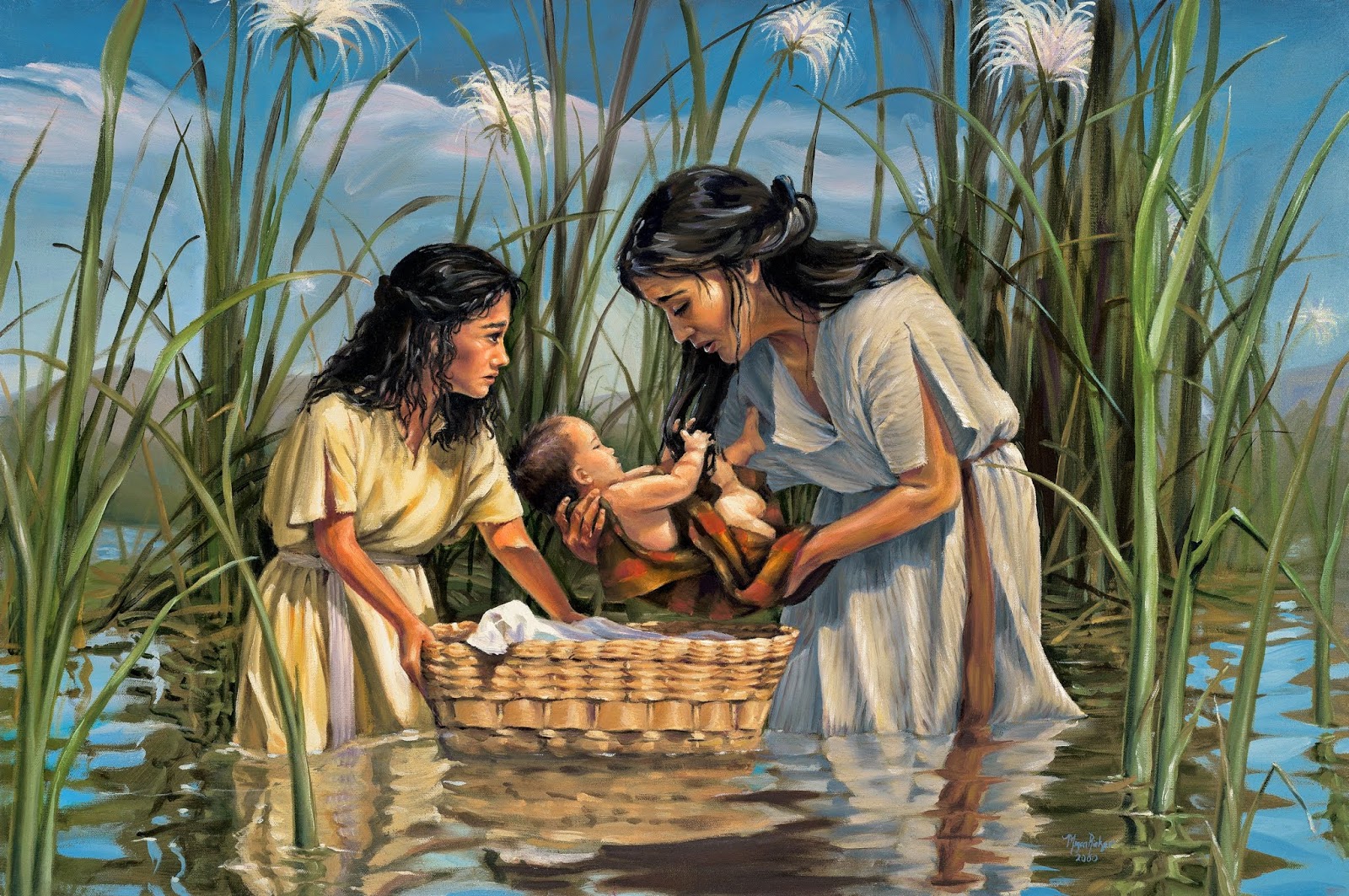
The Bible has something to say about ‘social distancing. In the opening book, Genesis, Jacob, and his father-in-law had distance between them, but that was based on mistrust and conniving. Later, the brothers of Joseph distanced themselves from Joseph and plotted his death at that time. Moses' sister Miriam stood at a distance from the baby Moses to observe what would happen to him as he floated in a basket. Distance had to do with safety for her.  

When the Jewish people received the Torah at Mt Sinai, they were afraid and stood at a distance so they wouldn't be crushed in the earthquake and lightning storm. Similarly, Peter stayed at a distance after Yeshua was arrested, lest he be caught as one of the followers of the messianic hopeful. 

Social distancing is sensible, but as Kathy wrote above, "it's an unfortunate term." Really the 1.8-meter distance that is recommended in the public is not really possible to maintain in queues at the airport or at the grocery stores. 

When you hear the term later today and tomorrow and for the months to come, will you think of airports and grocery stores? Or will you think of the Bible and those people who tried to hide for fear? Will you think about God and be socially distant from him or will this be a time when you draw near to him? 

The Bible says "draw near to God" and more importantly it tells us why. This from the epistle to the Hebrews: "For we do not have a high priest who cannot sympathize with our weaknesses, but One who has been tempted in all things as we are, yet without sin. Therefore let us draw near with confidence to the throne of grace so that we may receive mercy and find grace to help in time of need." 

Yeshua (Jesus in Hebrew) is that high priest who can sympathize with us in our viral situations. He was tempted in every way just like we are, to horde and to be hostile and angry with our neighbors. He was tempted to hate government impositions, yet he was without sin. Because of his success, we can have confidence to draw near to God. That gives me hope in these troubling times.

God's arms are open wide to you. James wrote this, "Draw near to God and he will draw near to you." That sounds like the plan. No six-foot rule. He's longing to be with you. Won't you trust him now?


28 February 2020

Live life well...today

This morning I awoke to news of more deaths from coronavirus and wondered how long it would be before it was titled an international pandemic. Then I reflected again on Kobe Bryant and the others in that helicopter. Their death came so suddenly. Then I received a notice from my high school class (we graduated 700 in 1969) that another classmate had passed away this week. In summary, this could be depressing, but it isn't.

Of course, there is sadness. Of course, there is weeping. Of course, there is the reminder that life is ephemeral and won't last much longer. That in itself could drive some to drink and curse the day they were born. Since we are all going to die, let's eat, drink and waste ourselves. So some conclude.

But if any of you who reads this blog knows me at all, you know that I'm a glass-half-full kind of guy. You know that I'm keen to make the best of any and all situations if that's possible. Not a Polyana, but an optimist, to be sure.

So when I read of all this dying, and ponder what might have been with the Swine Flu or SARS or what might be with corona, it's a time for personal reflection. I want to live in the now, not in the fear of the future.

They say today is a gift, that's why they call it the 'present.'

That's not only for a Chinese fortune cookie; that's for me ... today! How will I live today? What will I do?

The 12-step folks have a 12-thought reading called "Just for Today." I share it below in full and hope that it helps you as it has helped me to live in the present.

Yesterday is gone; it's not coming back. So all my frustrations and self-kicking are gone. My regrets can be instructive, but yesterday is a bad day in which to live. The past at best gives me haunting or regrets. Or pride in accomplishments. None of that works for me.

Similarly, tomorrow never comes. No wonder the image about free beer makes sense. Hope matters and I don't want to demean those who live in hope. But the dwelling only in tomorrow in such a way that you miss out on today makes no sense.  Plans matter; a wise man has to make plans. But to live only in the future is unwise.

I'm not talking about the Grass Roots' wrong evaluation of "Let's live for today." Their dismissal of future planning is not in my view. I'm talking about living well today, making the best of situations in front of me today.

I'm letting the deaths of others remind me to live well today.
On my Facebook today in light of another classmate's passing, I wrote, "Some of our class were well known; others less so. But in his life, Bruce sounds like he made a difference in the lives of others, and that's to his credit. And to me, that's a good reminder to keep helping, keep reaching out, keep loving people. We all have a 'use-by' date... let's make a difference in someone's life today."  


Maybe that comment will put this in perspective and maybe it will help you as well.

-----------------------------------------------------------

Just for Today:
1. Just for today, I will try to live through this day only, and not tackle my whole life's problem at once. I can do things for 12 hours that would appall me if I had to keep them up for a lifetime. 
2. Just for today, I will be happy. This assumes that what Abraham Lincoln said is true, that "most folks are about as happy as they make up their minds to be." Happiness is from within; it is not a matter of externals. 
3. Just for today, I will try to adjust myself to what is, and not try to adjust everything to my own desires. I will take my family, my business, and my licks as they come and fit myself to them. 
4. Just for today, I will take care of my body. I will exercise it, care for it, nourish it, not abuse or neglect it so that it will be a perfect machine for my bidding. 
5. Just for today, I will try to strengthen my mind. I will learn something useful. I will not be a mental loafer. I will read something that requires effort, thought, and concentration.
6. Just for today, I will exercise my soul in three ways: I will do somebody a good turn and not get found out; I will do at least two things I don't want to do, as William James suggests, just for exercise. 
7. Just for today, I will be agreeable. I will look as well as I can, dress as becomingly as possible, talk low, act courteously, be liberal with praise, criticize not at all, nor find fault with anything -- and not try to regulate or improve anyone. 
8. Just for today, I will have a program. I will write down what I expect to do every hour. I may not follow it all exactly, but I will have it. It will eliminate two pests: hurry and indecision. 
9. Just for today I will have a quiet half-hour all by myself and relax. In this half-hour sometimes I will thank God, so as to get a better perspective of my life. 
10. Just for today, I will be unafraid, especially I will not be afraid to be happy, to enjoy what is beautiful, to love, and to believe that those I love, love me.

24 February 2020

Charlotte Alter and the new politicians

In a recent interview with Fareed Zakaria on CNN, Charlotte Alter, author of "The Ones we've been waiting for," was supposed to talk about the new politicians. After all in the 2020 elections in the US, several of the candidates on the Democratic side are and one on the Republican side is 70 years old or older. Zakaria wanted to know where the new politicians are and Alter weighed in.  (See CNN.com/Fareed).  Charlotte is a national correspondent for Time magazine.

She defined the young people (aged 24-39) as living in a world of precariousness. Their boundaries are gone. But that's not their doing. The attitudes and guardrails of American life in the XXth century are gone, crumbled, eroded. These Millenials are shaped by 9-11 and the wars in Iraq and Afghanistan, and perhaps most clearly reshaped by the two major social and street activism moments of "Occupy Wall Street" and "Black lives matter."  So says Alter.  Her points are fascinating to consider.

She says that Barack Obama, who won on the strength of the young people's vote, disappointed them because he couldn't fix the systemic problems. That's why so many turned to leaderless actions in the Occupy movements and the "black lives matter" calls because there was no singular leader to those events.

The question then is who will lead them?
And will they vote for a Bernie Sanders or Elizabeth Warren at the ballot box, and not only show up at a rally?
Are they only enamored by the event and the possibility of change from the Donald to someone who will give them free health care or daycare for their children?
The questions loom large.

I was disappointed in the interview because Zakaria had promised something about the new politicians to be the candidates of the future, and then they didn't even discuss this at all. Alter does talk about that in her new book.

I'm hopeful that there will be new blood on the horizon. Maybe Yang or Booker or Buttigieg or Ocasio-Cortez represent substantial age change. And maybe they will have their day in the sun in the years to come. And maybe these Millenials will be less personality-driven than others. But then again, the proof is in the future pudding.

@CharlotteAlter


12 February 2020

Bokser, carob, Jewish eating (or not!); It's all about the roots

From this article in Mosaic magazine, written by Soloveichik who is the rabbi of Congregation Shearith Israel in New York and director of the Straus Center for Torah and Western Thought at Yeshiva University.

A Christian lady north of Dubbo dropped into our shop this week and brought enough bokser for an army. You are welcome to come by and collect a few pods. Given that, and the tradition of Tu Bishvat, I read this article by the rabbi and found his thesis of 'roots' very worthwhile. I also remember the bokser and how disgusting it seemed.  His comments will surely inspire you today. Maybe I'll see you in our Bondi Junction book shop soon.

Surely there are many American Jews, at least of a certain age, who still vividly remember, as children in religious school, imitating their ancestors by ingesting this fruit in honor of Tu b’Shvat, the annual Jewish festival of trees that is celebrated today. And there is ample reason why they should remember: carobs are remarkably unpleasant to eat. As my Mosaic colleague Philologos once candidly put it, carobs “are flattish, irregularly curved, serrated along the edges, four to six inches in length, hard as nails to bite into, and yield—if you haven’t meanwhile broken all your teeth—a mealy substance that has been described as smelling like Limburger cheese.”
Perhaps, however, a closer look can reveal just how and why this much-maligned fruit is, in its own way, an ultimate embodiment of Jewish vitality and endurance.

In the Talmud, the holiday of Tu b’Shvat commemorates nothing more than one in a series of halakhic deadlines related to the obligation to offer tithed portions of the year’s crops to the Levites in the Temple. For fruits in particular, the end of one fiscal year and the beginning of the next was marked by Tu b’Shvat, the fifteenth day of the Hebrew month of Shvat. Because these laws of tithing applied only to produce grown in the Holy Land, celebrating Tu b’Shvat became throughout the centuries a way of connecting to the land itself. For Ashkenazi Jews, that meant eating one fruit: carob, whose name derives from the Hebrew haruv and whose Yiddish name, bokser, is short for the German bokshornbaum, the tree with ram’s-horn-shaped fruit.

DAILY WEEKLY
There’s no question that bokser had long been native to the land of Israel. Carob seeds many thousands of years old have been discovered in archaeological sites all over the land. Yet while the Bible celebrates the “seven species” of wheat, barley, grapes, figs, pomegranates, olives, and dates, nary a mention of haruv occurs in Scripture. And no wonder. Confirming our own culinary intuitions, the Talmud refers to carob several times as unfit for human consumption (maakhal beheimah).

So why did Ashkenazi Jews eat bokser, of all fruits, on Tu b’Shvat? The late Gil Marks explains: “In the days before quick transport and refrigeration, the carob’s hard, dry texture made it one of the few fruits grown in the land of Israel capable of withstanding long-distance shipping without spoilage.” Evidently, for the Jews of Eastern Europe and their far-flung coreligionists and descendants elsewhere, so great was the desire for a “taste” of the land that even bokser could be tolerated. And indeed more than tolerated. Rabbi Berel Wein, who (like me) grew up and celebrated Tu b’Shvat in the arctic tundra of Chicago, recalls:
The bokser was hard as a rock and tasteless as wood. Yet I noticed that my parents, Jews of an earlier generation who were born before there was a state of Israel or a time when free and open worship was really allowed at the Western wall without Arab or government interference, ate their pieces of bokser slowly and with great affection. Only later in my life did I realize that eating that piece of bokser validated their hope and belief that the land of Israel would yet flourish and grow under Jewish sovereignty, and that the vineyards and orchards of the land promised to us by our prophets would become abundant reality.

It’s with this in mind
that we can begin to recover the deeper dimension of bokser. In its discussion of “laws dependent on the land,” the Mishnah presents us with the following conundrum. Suppose a tree is planted on one of the land’s borders, with its roots in sacred soil but its fruit hanging over into non-native territory—into, in effect, the Diaspora. Is the fruit subject to tithing in accordance with the laws relating to Tu b’Shvat? The answer is unequivocally yes: everything depends on the roots, not the foliage.

Another talmudic ruling is also relevant here. The tractate of Bava Batra includes a lengthy discussion of the obligations we owe our neighbors. According to one ruling, we may not plant a tree near our neighbor’s well because the roots, though on our own property, will extend underground and possibly contaminate his water supply. Any tree, therefore, must be planted at a distance of 25 cubits from neighboring property. But certain trees, with exceptionally long roots, must be placed twice as far away. One such tree, the Talmud stresses, is the haruv, the carob.

So, according to Jewish law, identity is defined by roots: surely, an arresting idea. After all, we moderns often assume the opposite—that identity is not predetermined but malleable, that it can be shed and replaced like a suit of clothes, that we can be whoever we wish to be. And to a certain extent that is true enough; taken to an extreme, however, such an attitude, Judaism insists, denies human nature. “For man is akin to a tree in the field,” Deuteronomy informs us. In the view of Rabbi Joseph Soloveitchik, this strange comparison suggests precisely that man, much like a tree, is in fact integrally connected with his roots, and indeed largely defined by them.

The carob, says the Talmud, has longer roots than most other Israelite trees; to eat its fruit was thus, for Jews in the Diaspora, to link themselves with a land and a heritage far away, and with an identity impervious to the often inimical forces of their surrounding environment. Unquestionably, sweeter and more exotic species of fruit exist abundantly in the Holy Land today, and can be almost instantly transported anywhere in the world. But even today, to connect with one’s long-ago ancestors in the land by savoring the humble carob is truly to comprehend the Psalmist’s confident exclamation: “Taste and see that the Lord is good.”

16 January 2020

Monday 20 January Prayers and more

Here are three elements of the Prayer Day for 
20 January 2020. 

We invite you to join us, at your home, in your synagogue or church, to invite the Almighty to help our state and our country to survive and for the rains to come in his good time and in his good measure to soak the catchments, to restock the dams, to provide needed rain for man and beast.

Following then are
1) Prayers to offer
2) Times to pray with commensurate Scriptures
3) The flyer which you can share with mates in your sphere of influence. Feel free to share this blog as well. And do let us know if and where you are joining us (and if you can, photograph one of your moments of prayer, please).

Thank you for joining us.


Prayers 20thJanuary 2020

“Do any of the worthless idols of the nations bring rain?
    Do the skies themselves send down showers?

No, it is you, Lord our God.
    Therefore our hope is in you,
    for you are the one who does all this.”  -Jeremiah 14.22


The bush fire prayer points

People:
·      Firemen
·      Ambulance and medical aid
·      Volunteers
·      Other responders
·      People behind the scenes (weather reporters, technical team, etc)
·      People who were injured
·      People with asthma and other problems that have been aggravated by this
·      Families of people who have passed away
·      For our governmental officials (Scott, Gladys) to make wise decisions
·      For ourselves that we wouldn’t grow weary or lose faith in our Father
·      Pray for effected believers and also to share their faith
·      People who are not believers to find hope and salvation


Life (human and animals)


Rebuilding and infrastructure
·     That God would restore the ruins


More aid and support and donations


That God would bring good out the situation


Pray for rain. 
And pray for the fires to cease


Scriptures to read and with which to agree:

He provides rain for the earth; he sends water on the countryside.   (Job 5:10)

Sow righteousness for yourselves, reap the fruit of unfailing love, and break up your fallow ground; for it is time to seek the LORD until he comes and showers his righteousness on you.     (Hosea 10:12)

You heavens above, rain down my righteousness; let the clouds shower it down. Let the earth open wide, let salvation spring up, let righteousness flourish with it; I, the LORD, have created it.    (Isaiah 45:8)

As the rain and the snow come down from heaven, and do not return to it without watering the earth and making it bud and flourish so that it yields seed for the sower and bread for the eater.  (Isaiah 55:10)

“Do any of the worthless idols of the nations bring rain?
    Do the skies themselves send down showers?

No, it is you, Lord our God.
    Therefore our hope is in you,
    for you are the one who does all this.”  (Jeremiah 14.22)


Yet he has not left himself without testimony; He has shown kindness by giving you rain from heaven and crops in their seasons; he provides you with plenty of food and fills your hearts with joy. (Acts 14.7)

Ask the LORD for rain in the time of the latter rain. The LORD will make flashing clouds; He will give them showers of rain, Grass in the field for everyone.
 (Zechariah 10.1)


Join us as we pray the following prayers… (and add your own as well)

We pray for the Firemen and lift them into your hands. We pray that you would keep them safe and protected. We pray that you would guide them and give them wisdom in the midst of a challenging and chaotic situation. May your angels surround them and keep them safe. Also, give them rest and strength, we pray that they will conquer and be victorious in their mission both as individuals and as a unit. May your grace and mercy be with them. Amen.

We also pray for all the ambulances and medical aid teams that your healing hand would be with them. May you relieve any stress or trauma that they may be experiencing and give them peace. Lord may you make their efforts successful in each and every situation and with each person they are helping. Amen

Lord we also pray for all the responders, volunteers and other people who have been helping and will help. Give them the courage they need to do your will and make their efforts successful! Let your favour be with them in each and every situation. Cause their efforts to multiply and help many. May your spirit be with them to help them accomplish their task. Amen

For all the people that were injured in the fire and also the families of victims of the fire to be healed both physically and emotionally. Lord, they are going through a very difficult time and we cry out to you for your mercy. We pray that they will experience your comfort and healing power in their lives at this moment! Bring them your Shalom and give them rest. We also pray for everyone who has asthma that they will be kept safe and protected from the smoke and that they would have the aid they need. In Jesus name, Amen 

Lord, we also pray that we ourselves wouldn’t grow weary and would continue to pray in faith knowing that you hear all our prayers and will answer them with a yes and amen. Keep our hearts strong as we continue to bring our requests before you. May we not get discouraged in seeing what’s going on, but may we keep our eyes on You, the lifter of our heads.

We also pray for all the believers who are affected by these fires that you would renew their hope and encourage their hearts in your word. May they feel your presence with them and give them hope. May you answer their prayers and keep them safe. Help them to help others and use them as a testimony to all they encounter. May they be bold in sharing the gospel in what may seem like a hopeless situation in people’s lives. Lord, we ask you to fill them afresh with your Holy Spirit to keep them going and to keep them strong. Amen

Lord we also pray for everyone who doesn’t have a relationship with you in the affected areas to turn to you instead of only to their situation, may they come to the knowledge of God and his goodness. Lord, we ask in faith that many would find you amongst the smoke and that they would have a clear vision of who you are and what you have done for them, as well as what you will do for them these coming days. Give them a hope that will turn their lives around both now and for eternity. Amen

Father, you want us to seek you. And that’s what we are doing just now. We long to be in your presence. We want your worth and your Word to expand across Sydney and across the state and our country. Use all these circumstances for your praise and honour. Somehow bring glory to yourself as this crisis ends. Be exalted, oh God, above the heavens, and let your glory be over all the earth. We love and trust you. Amen.


Join us in prayer at these times if you would:

6:14     Read Ephesians 6.14
7:14     Read 2 Chronicles 7:14 
8:03     Read Psalms 8:3
9:26     Read Deuteronomy 9:26
10:01   Read Romans 10:1
11:41   Read John 11:41
12:01   Read Isaiah 12:1
1:05     Read James 1:5
2:01     Read 1 Samuel 2:1
3:09     Read Zephaniah 3:9
4:31     Read Acts 4:31
5:13     Read James 5:13-4


Thank you from all the Jews for Jesus Australia. 

PO Box 925. Sydney 2001 AUSTRALIA

Ph: 1.800.MESSIAH (637.724)
From overseas:   +61.2.9388.0559


The Just shall live by faith: Shabbat Re'eh

  The Just shall live by faith Shabbat Re'eh 25 Av 5786 By Bob Mendelsohn 7-8 August 2026 Torah (Deuteronomy 11:26- 16:17) Haftarah (and...