Showing posts with label lonely. Show all posts

31 January 2019

Move over, Richard Cory: A lonely life

Anyone who has been listening beyond the ping and vibration tones of his smartphone the last few years has heard that the use of this technology is increasing loneliness in its users. Of course, the technology has increased our awareness of others, and activities of our families and friends, as well. We know more; we want to know more; we crave such knowledge, and yet, the double-edge sword of information and loneliness is apparent. 

Every study highlights this sad consideration. From San Francisco (CA) Statue University, this report from April last year, “Digital addiction increases loneliness, anxiety and depression.” The author of the report, Lisa Owens Viani, cites “new study published in NeuroRegulation, San Francisco State University Professor of Health Education Erik Peper and Associate Professor of Health Education Richard Harvey argue that overuse of smart phones is just like any other type of substance abuse.”  The report also noted “In a survey of 135 San Francisco State students, Peper and Harvey found that students who used their phones the most reported higher levels of feeling isolated, lonely, depressed and anxious. They believe the loneliness is partly a consequence of replacing face-to-face interaction with a form of communication where body language and other signals cannot be interpreted.”

Emarketing published a report in 2017, “The report also looks at internet usage and concludes that in 2017, there will be almost 3.5bn internet users worldwide, representing 46.8 per cent of the global population. By the end of 2019, eMarketer predicts that more than half of the global population will use the internet, either through a PC or mobile device.” (https://www.emarketer.com) 

In a study from the University of Chicago published in 2015,  under the title “The Neuroendocrinology of Social Isolation” this abstract is found. “Social isolation (Loneliness) has been recognized as a major risk factor for morbidity and mortality in humans for more than a quarter of a century. Although the focus of research has been on objective social roles and health behaviour, the brain is the key organ for forming, monitoring, maintaining, repairing, and replacing salutary connections with others. Accordingly, population-based longitudinal research indicates that perceived social isolation is a risk factor for morbidity and mortality independent of objective social isolation and health behaviour. Human and animal investigations of neuroendocrine stress mechanisms that may be involved suggest that (a) chronic social isolation increases the activation of the hypothalamic pituitary adrenocortical axis, and (b) these effects are more dependent on the disruption of a social bond between a significant pair than objective isolation per se. The relational factors and neuroendocrine, neurobiological, and genetic mechanisms that may contribute to the association between perceived isolation and mortality are reviewed.” (https://www.annualreviews.org/doi/10.1146/annurev-psych-010814-015240) 

In other words, isolation as is evident in smartphone usage, causes the brain to function or malfunction in such a way to lead to mortality. Smartphone usage is killing us!

In a similar study of university students in Istanbul, Turkey, in 2016,  published in the name, “Smartphone addiction and its relationship with social anxiety and loneliness” ,this summary is found. “The results of this study indicate that social phobia was associated with the risk for smartphone addiction in young people. Younger individuals who primarily use their smartphones to access social networking sites also have an excessive pattern of smartphone use.” 

Here in Australia last year, the Australian Psychological Society and Swinburne University produced The Australian Loneliness Report, based on a national survey of adults. This examined the prevalence of loneliness and how it affects the physical and mental health of Australians. It is the most comprehensive study of loneliness completed in Australia. 
Here is the full report: ( https://psychweek.org.au/wp/wp-content/uploads/2018/11/Psychology-Week-2018-Australian-Loneliness-Report-1.pdf)

What did the report show? 
  • • 1 in 4 Australians feel lonely.
  • • Many Australians – especially younger Australians – report anxiety about socialising.
  • • Thirty per cent don’t feel part of a group of friends.
  • • Lonely Australians have worse physical and mental health, and are more likely to be depressed.

Who can fix this?

Robert Putnam wrote the seminal book “Bowling Alone” which I read some years ago. He said, “American attendance at club meetings went down by 58 percent. Family dinners declined by 33 percent. Inviting friends to one’s home decreased by 45 percent. The sidebar supplements those findings by posting two other claims: A ten-minute commute slashes social capital (“features of social organization such as networks, norms, and social trust that facilitate coordination and cooperation for mutual benefit”) by 10 percent, but joining a group reduces by half the odds that one will die next year.” For Putnam it’s all about belonging, whether a club, an association, or some personal grouping.

Back in San Francisco, some students are making a change in their behaviour to counter the morbid technology/ lonely continuum. 
“Two of Peper’s students say they have taken proactive measures to change their patterns of technology use. Recreation, Parks and Tourism major Khari McKendell closed all of his social media accounts about six months ago because he wanted to make stronger face-to-face connections with people. “I still call and text people but I want to make sure that a majority of the time I’m talking to my friends in person,” he said. 

Senior Sierra Hinkle, a Holistic Health minor, says she has stopped using headphones while out walking in order to be more aware of her surroundings. When she’s out with friends, they all put their phones in the center of the table, and the first one to touch theirs buys the drinks. “We have to become creative and approach technology in a different way that still incorporates the skills we need but doesn’t take away from real-life experience,” said Hinkle.”

My conclusion: In the beginning of recorded time, found in the record of Holy Scripture, God gave Adam a helpmate, Eve. The animals were abundant, but he saw Adam as alone and His conclusion was that this condition was “not good.” Eve and Adam had children and the social animal, man, began to populate and fill the earth. Gathering into communities, some in cities, and some in countryside, the sense of belonging grew as people found the same interests and the same activities. They gathered together in situations which either were good for them all, or which caused them to fall together. But together is what mattered. 

Amos the prophet said, “can two walk together unless they be in agreement?” (3.3) and the Psalmist had declared earlier “Behold, how good and pleasant it is when brothers dwell together in unity.” (133.1) Things seem to be better when folks walk or bowl or play pickleball together. Teams matter; your social capital matters; your life matters. And being with people who sing the same song as you, dance in the same rhythm, bowl on the same lane… it all adds up to health. 


Life is not about how many ‘likes’ you received to your latest Instagram photo; it’s about relationships with real people who really know you, and whom you really know. 

26 June 2015

Hardwired for relationship

What is it about reality tv shows and the human condition?
My Kitchen Rules

So you think you can dance?


It started with Survivor, and now each night on Aussie TV, and I'm guessing where you are also, the assortment of shows continues relentlessly. Australian Idol, So you think you can dance, My Kitchen Rules, The Block, The Apprentice, the Bachelor, the list continues ad nauseum. But someone thinks this makes sense. And someone else knows it makes dollars and cents. Abundantly. Why is that?

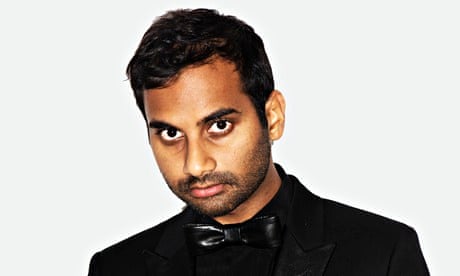
Sociologist and New York University professor Eric Klinenberg teamed up with actor/ comedian Aziz Ansari to unpack relationships in a book that was released this month. Ansari constantly chased love as wannabe ladykiller Tom Haverford in TV show Parks and Recreation, and contemplates the strangeness of online dating throughout his standup comedy.

Modern Romance, their collaborative book, used a rigorous and data-led examination of how we date. The pair conducted hundreds of interviews with people from Japan to the American midwest to gauge how love, sex and relationships have changed with the advent of networked technology.
They even set up a research forum on Reddit, Modern Romantics, which asked questions like “Has anyone tried an ‘open relationship’? What were the rules? How did it go? Would you do it again?” and “Has anyone hired a consultant to help you put together an online dating profile or worked with a dating coach? How’d that go?”

Klinenberg, meanwhile, is similarly steeped in the study of modern relationships. His book Going Solo: The Extraordinary Rise and Surprising Appeal of Living Alone, published last year, examined how solo living has become so prevalent in recent years that there are now more people living alone in the US than nuclear families living together.

So my question remains. What is it about reality tv shows and the human condition?

I believe we are all hardwired for relationship. 

I read a long thesis from the UK while studying for this blog. It's here online . Written by Val Gillies for Families & Social Capital ESRC Research Group, of South Bank University and published 12 years ago, the historical review of sociology is excellent and well worth a long-read. Val looks back at trends and evaluates the changes in society over generations, focusing principally from the 1960s onwards.

For instance, "Raymond Firth and colleagues(1969) also focused on middle class families, emphasising the continued significance of selected or chosen kin relationships. These studies were extremely influential and spurred a new interest in social networks, communities and more specifically kinship systems. Although such topics eventually fell out of favour they have recently been revived by social capital theorists attempting to measure the value of social connectedness. The major focus in the 1960s and ‘70s was on determining the norms of obligation and reciprocity governing such relationships, in the context of a general consensus that kinship ties are the closest and most committed (Crow and Allan 1994)" 
 
Gillies goes on to discuss 'companionate marriage,' "As Janet Finch and Penny Mansfield (1991) point out, the notion of ‘companionate marriage’ emerged as an ideal amid a post-war concern to consolidate and stabilise family life. Emphasis was placed on the principles of ‘partnership’, sharing and greater equality between the sexes, and the advent of a new, more home-centred family life. Sociological writings, particularly the community studies of the 1950s and 60s, commonly drew on and reproduced this companionate ideology when theorising about family."
 
The term "Companionate marriage" of course would widen in the next few decades into homosexual and other partnering types. But the point is that people want relationships, and although 'family' as traditional is not always the norm, the value of real people really speaking into real people's lives is continuing. 
 
This one section about modernity and 'individualisation' really spoke to me. "Beck and Beck-Gernsheim’s ‘individualisation thesis’ articulates a similar picture, suggesting that a new age of modernity has replaced the old predictabilities and certainties of industrial society, bringing with it new risks and opportunities (Beck and Beck-Gernsheim 1995, 2002). They argue that these changes have fundamentally altered the experience of love, sexuality and family life, placing intimacy at the heart of detraditionalised life. Liberated from precepts and conventions individuals become authors of their own lifescripts, but while this process of ‘individualisation’ weakens and challenges traditional social ties of kinship and marriage, love and intimacy are ever more sought after to ease the isolation of this autonomy: ‘For individuals who have to invent or find their own social setting, love becomes the central pivot giving meaning to their lives’ (Beck and Beck-Gernsheim 1995: 170).
 
All this to say that I believe we are hardwired for relationships. We need others. We need to know and be known by others. We want to be human with other humans. And whether these relationships are forced as in arranged marriages, or simply as two young people find each other and marry, or we are hoping for that selfie with another who is prominent in footy or The Bachelor, we want to know and be known. 
 
The problem of course, with the reality shows is two fold. One, they are not real. The camera crew and others on production staff also fill 'the island' or the 'kitchen' or the home to be renovated. The scripts are carefully edited; the dangers filmed but rarely truly shown. The second problem is that we might know of bit of the back story of their journey of the candidates for Dancer or Singer or Talent of the show, they in fact, know nothing of us. No relationship is actual. It is entirely voyeuristic. We know what we know about them. They know nothing of me or you. We are 'the audience' and 'the fans whom I would like to thank for voting for me. I love each of you,' says each winner, but they don't really love us. They don't know us at all.
 
Our desire to be known and to know is thus dissatisfied. We fail in relationships. And yet, we are still hardwired for them. So where can we go? 

I believe, as you might expect, that it all begins with relationship with God. He is to be known, and has made it clear how that happens in the pages of the Bible. He wants to be in relationship with us, but we fail a fair bit. Consider these phrases, all from the apostle Paul:
1Cor. 1.21 For since in the wisdom of God the world through its wisdom did not come to know God, God was well-pleased through the foolishness of the message preached to save those who believe.

Gal. 4.9 But now that you have come to know God, or rather to be known by God, how is it that you turn back again to the weak and worthless elemental things, to which you desire to be enslaved all over again?

Titus 1.16 They profess to know God, but by their deeds they deny Him, being detestable and disobedient, and worthless for any good deed.

Knowing God is about knowing Jesus. He said as much in his final (listed) prayer, "And this is eternal life, that they may know Thee, the only true God, and Yeshua the Messiah whom Thou hast sent." (John 17.3) This is the key to eternity. Knowing Yeshua as Messiah and knowing His Father, from whom all good things come. Yeshua said, "My sheep hear My voice and I know them, and I give them eternal life." (John 10.27-28) Knowing whom to follow and whose voice it is ... that's eternal life. Being in relationship with Him makes all things new. 

Then He gives us others, in families, or in congregations, or around the world via Skype and online LiveChat who are in fact, family.  The apostle John said, "if we walk in the light as He Himself is in the light, we have fellowship with one another, and the blood of Jesus His Son cleanses us from all sin." (1 John 1.9) This fellowship is real and deep. It's personal and much better than a cheer or cheerleader on a Television reality show. 

No wonder John said moments earlier, "what we have seen and heard we proclaim to you also, that you also may have fellowship with us; and indeed our fellowship is with the Father, and with His Son Yeshua the Messiah." (1 John 1.3)

Hardwired for relationship? It all starts with the Almighty. Get right with Him and then you will find others, also cleansed by His love and forgiveness, with whom you can share abundantly.  Want to try that one on?


26 August 2014

Still Life: A movie of hope

Eddie Marsan plays a tough guy, but soft on the inside, on the TV series Ray Donovan. He showed me a very different side of his acting ability in the movie my wife and I saw on Sunday night, Still Life. I chose this photo to represent the flick as Eddie's character, Mr John May, is ever looking up, not to God as one might expect in a religious blog, but up to life. He seems to be querying it regularly.

He does most things regularly. He eats the same meal on return from his consistent work at an office in a local Council in South London. He is a quiet man, unassuming and yearns to bring honor and dignity to others, even when no one else will do that.  And he doesn't seem worried to gain anything by this action either. For over two decades he has worked basically alone in a small office, and keeps meticulous records with almost-OCD fidelity. But something else is driving him to do this work, and the word for it is OPTIMISM.

He is looking up. His job is to bring to final rest people who seem to have no living relatives. But he wants to find family members of deceased people and bring them to a bit of conclusion. John works with the local police as a detective for the coroner, trying to bring closure, coordinating funerals, burials, disposal of ashes, and wants to bring dignity and a bit of life in the face of death.

No one really seems to care; no one seems to notice him. I kept considering allusions to Alan Arkin in his 1968 role of John Singer in "The Heart is a lonely Hunter." He was brilliant (Academy Award nomination) as the deaf-mute who helped all kinds of people who always seemed to be troubled and troubling. Arkin's Singer back then reminded me of Richard Cory, from the poem by Edwin Arlington Robinson. Maybe it was only their endings, but Cory's dignity (forget that he was wealthy) along with Singer and here John May all spoke of a quiet fortitude and observable honor they brought to their worlds.

Cory: "And he was always quietly arrayed,
And he was always human when he talked."


And maybe it's that 'humanness' which is ever hoping for something better than an uncaring industrial dumping of cremated ashes. John May kept a scrapbook of the abandoned lonely souls for whom relatives had no time. They were his own family. And some cases remained open long after the funerals, so that his optimism could honestly be fruitfully concluded.

Hope brings great energy. And John May keeps his energy inside his dignified frame, and only towards the end does he begin to explore it, tasting new tastes, considering his own possibilities of life. Hope does that. It lets us look up. It lets us consider things beyond ourselves and our current experiences. Hope allows us to launch out, because we have an anchor that keeps us safely assured while we launch.

The Bible says, "hope does not disappoint, because the love of God has been poured out within our hearts through the Holy Spirit who was given to us." (Romans 5.5) And it's that optimism, that hope, which John May characterizes. Uberto Pasolini has created a beauty of a film in his native England. 

Let me ask you-- where do you find hope? What gives you something for which you get up each morning? The humanness of John May and that which he wanted to give his clients is noble beyond the new administrator in the local council. But I don't think it's beyond the desire of the Lord of life. In fact, I think the optimism of John May is right for us all. For you and for me. I was challenged; maybe you will be challenged also. 

Then reach out, look up, for hope is available for us all, in the person of Yeshua, the Messiah of Israel and Light of the World. He brings dignity to each of us. He longs to be in relationship with each of us. 

Of everyone ever, 'he was always human when he talked.' Listen to what He says of you, of Himself, of our need for Him. And you will find life. It's better that you find it now than at the end of your own movie.

Where were you on...?

Today in history is 7 October. Perhaps you remember attending a friend's birthday party or watching a game of the World Series. For some...