What is it about reality tv shows and the human condition?
It started with Survivor, and now each night on Aussie TV, and I'm guessing where you are also, the assortment of shows continues relentlessly. Australian Idol, So you think you can dance, My Kitchen Rules, The Block, The Apprentice, the Bachelor, the list continues ad nauseum. But someone thinks this makes sense. And someone else knows it makes dollars and cents. Abundantly. Why is that?
Sociologist and New York University professor Eric Klinenberg teamed up with actor/ comedian Aziz Ansari to unpack relationships in a book that was released this month. Ansari constantly chased love as wannabe ladykiller Tom Haverford in TV show Parks and Recreation, and contemplates the strangeness of online dating throughout his standup comedy.

Modern Romance, their collaborative book, used a rigorous and data-led examination of how we date. The pair conducted hundreds of interviews with people from Japan to the American midwest to gauge how love, sex and relationships have changed with the advent of networked technology.
 All this to say that I believe we are hardwired for relationships. We need others. We need to know and be known by others. We want to be human with other humans. And whether these relationships are forced as in arranged marriages, or simply as two young people find each other and marry, or we are hoping for that selfie with another who is prominent in footy or The Bachelor, we want to know and be known.
Gal. 4.9 But now that you have come to know God, or rather to be known by God, how is it that you turn back again to the weak and worthless elemental things, to which you desire to be enslaved all over again?
Titus 1.16 They profess to know God, but by their deeds they deny Him, being detestable and disobedient, and worthless for any good deed.
 |
| My Kitchen Rules |
 |
| So you think you can dance? |
It started with Survivor, and now each night on Aussie TV, and I'm guessing where you are also, the assortment of shows continues relentlessly. Australian Idol, So you think you can dance, My Kitchen Rules, The Block, The Apprentice, the Bachelor, the list continues ad nauseum. But someone thinks this makes sense. And someone else knows it makes dollars and cents. Abundantly. Why is that?
Sociologist and New York University professor Eric Klinenberg teamed up with actor/ comedian Aziz Ansari to unpack relationships in a book that was released this month. Ansari constantly chased love as wannabe ladykiller Tom Haverford in TV show Parks and Recreation, and contemplates the strangeness of online dating throughout his standup comedy.
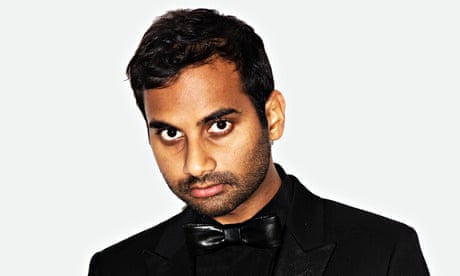
Modern Romance, their collaborative book, used a rigorous and data-led examination of how we date. The pair conducted hundreds of interviews with people from Japan to the American midwest to gauge how love, sex and relationships have changed with the advent of networked technology.
They even set up a research forum on Reddit, Modern Romantics,
which asked questions like “Has anyone tried an ‘open relationship’?
What were the rules? How did it go? Would you do it again?” and “Has
anyone hired a consultant to help you put together an online dating
profile or worked with a dating coach? How’d that go?”
Klinenberg, meanwhile, is similarly steeped in the study of modern relationships. His book Going Solo: The Extraordinary Rise and Surprising Appeal of Living Alone, published last year, examined how solo living has become so prevalent in recent years that there are now more people living alone in the US than nuclear families living together.
So my question remains. What is it about reality tv shows and the human condition?
I believe we are all hardwired for relationship.
I read a long thesis from the UK while studying for this blog. It's here online . Written by Val Gillies for Families & Social Capital ESRC Research Group, of South Bank University and published 12 years ago, the historical review of sociology is excellent and well worth a long-read. Val looks back at trends and evaluates the changes in society over generations, focusing principally from the 1960s onwards.
For instance, "Raymond Firth and colleagues(1969) also focused on middle class families, emphasising the continued significance of selected or chosen kin relationships. These studies were extremely influential and spurred a new interest in social networks, communities and more specifically kinship systems. Although such topics eventually fell out of favour they have recently been revived by social capital theorists attempting to measure the value of social connectedness. The major focus in the 1960s and ‘70s was on determining the norms of obligation and reciprocity governing such relationships, in the context of a general consensus that kinship ties are the closest and most committed (Crow and Allan 1994)"
Gillies goes on to discuss 'companionate marriage,' "As Janet Finch and Penny Mansfield (1991) point out, the notion of ‘companionate marriage’ emerged as an ideal amid a post-war concern to consolidate and stabilise family life. Emphasis was placed on the principles of ‘partnership’, sharing and greater equality between the sexes, and the advent of a new, more home-centred family life. Sociological writings, particularly the community studies of the 1950s and 60s, commonly drew on and reproduced this companionate ideology when theorising about family."
The term "Companionate marriage" of course would widen in the next few decades into homosexual and other partnering types. But the point is that people want relationships, and although 'family' as traditional is not always the norm, the value of real people really speaking into real people's lives is continuing.
This one section about modernity and 'individualisation' really spoke to me. "Beck and Beck-Gernsheim’s ‘individualisation thesis’ articulates a similar picture, suggesting that a new age of modernity has replaced the old predictabilities and certainties of industrial society, bringing with it new risks and opportunities (Beck and Beck-Gernsheim 1995, 2002). They argue that these changes have fundamentally altered the experience of love, sexuality and family life, placing intimacy at the heart of detraditionalised life. Liberated from precepts and conventions individuals become authors of their own lifescripts, but while this process of ‘individualisation’ weakens and challenges traditional social ties of kinship and marriage, love and intimacy are ever more sought after to ease the isolation of this autonomy: ‘For individuals who have to invent or find their own social setting, love becomes the central pivot giving meaning to their lives’ (Beck and Beck-Gernsheim 1995: 170).
 All this to say that I believe we are hardwired for relationships. We need others. We need to know and be known by others. We want to be human with other humans. And whether these relationships are forced as in arranged marriages, or simply as two young people find each other and marry, or we are hoping for that selfie with another who is prominent in footy or The Bachelor, we want to know and be known.
The problem of course, with the reality shows is two fold. One, they are not real. The camera crew and others on production staff also fill 'the island' or the 'kitchen' or the home to be renovated. The scripts are carefully edited; the dangers filmed but rarely truly shown. The second problem is that we might know of bit of the back story of their journey of the candidates for Dancer or Singer or Talent of the show, they in fact, know nothing of us. No relationship is actual. It is entirely voyeuristic. We know what we know about them. They know nothing of me or you. We are 'the audience' and 'the fans whom I would like to thank for voting for me. I love each of you,' says each winner, but they don't really love us. They don't know us at all.
Our desire to be known and to know is thus dissatisfied. We fail in relationships. And yet, we are still hardwired for them. So where can we go?
I believe, as you might expect, that it all begins with relationship with God. He is to be known, and has made it clear how that happens in the pages of the Bible. He wants to be in relationship with us, but we fail a fair bit. Consider these phrases, all from the apostle Paul:
1Cor. 1.21 For since in the wisdom of God the world through its wisdom did not come to know God, God was well-pleased through the foolishness of the message preached to save those who believe.
Gal. 4.9 But now that you have come to know God, or rather to be known by God, how is it that you turn back again to the weak and worthless elemental things, to which you desire to be enslaved all over again?
Titus 1.16 They profess to know God, but by their deeds they deny Him, being detestable and disobedient, and worthless for any good deed.
Knowing God is about knowing Jesus. He said as much in his final (listed) prayer, "And this is eternal life, that they may know Thee, the only true God, and Yeshua the Messiah whom Thou hast sent." (John 17.3) This is the key to eternity. Knowing Yeshua as Messiah and knowing His Father, from whom all good things come. Yeshua said, "My sheep hear My voice and I know them, and I give them eternal life." (John 10.27-28) Knowing whom to follow and whose voice it is ... that's eternal life. Being in relationship with Him makes all things new.
Then He gives us others, in families, or in congregations, or around the world via Skype and online LiveChat who are in fact, family. The apostle John said, "if we walk in the light as He Himself is in the light, we have fellowship with one another, and the blood of Jesus His Son cleanses us from all sin." (1 John 1.9) This fellowship is real and deep. It's personal and much better than a cheer or cheerleader on a Television reality show.
No wonder John said moments earlier, "what we have seen and heard we proclaim to you also, that you also may have fellowship with us; and indeed our fellowship is with the Father, and with His Son Yeshua the Messiah." (1 John 1.3)
Hardwired for relationship? It all starts with the Almighty. Get right with Him and then you will find others, also cleansed by His love and forgiveness, with whom you can share abundantly. Want to try that one on?


