11 October 2016

Hope, where is it? A Yom Kippur message


G’mar Chatimah Tovah. May you be inscribed and sealed at the end for good. That’s one of the best greetings on this holiday. Of course, when I grew up the greeting was “good yontif.” And then we wish each other an easy fast. And a common reply as we ponder not eating for 25 hours is “I hope so!” Everyone from Desmond Tutu to Albert Einstein to another 10,000 quick find entries has a comment about the idea of hope. Mumford and Sons, Donald Trump, Hillary Clinton, John Longmire and Jason Day…everyone has a hope and a dream and a quote on Wikipedia, or so it seems.

Ask for a quote on emotion or Sydney Swans, or a quote on wisteria or bottle brushes and you will find hundreds, but type in ‘hope’ and this request will garner 10,000 before I can even finish clicking my computer’s “Find” button. Here’s one: “We must accept finite disappointment, but never lose infinite hope.” Martin Luther King, Jr. And another from the wife of the current US president, “You may not always have a comfortable life and you will not always be able to solve all of the world's problems at once but don't ever underestimate the importance you can have because history has shown us that courage can be contagious and hope can take on a life of its own.” -Michelle Obama.

On Sunday I sat with some friends in Collaroy and learned that one of them was working on her Ph.D. in clinical psychology on the theme of ‘hope.’ This seriously excited me. And my excitement added to her excitement. She wanted to know my definition of hope. Hmm, I don’t know that I’ve ever really processed a singular definition of that. So I tried. And failed miserably. I know it’s a concept for a future. I know it’s related to faith, but is somehow distinct from it. Let me ask you—how would you define the word ‘hope?’

John Piper gave a sermon 30 years ago in which he wrote this, “Richard Sibbes, one of the great old Puritan preachers of Cambridge who died in 1635, wrote a whole book (175 pages) on Psalm 42:5. He was called “the sweet dropper” because of how much confidence and joy his sermons caused. He called his book The Soul’s Conflict with Itself, because in Psalm 42:5 that is exactly what you have, the soul arguing with itself, preaching to itself. “Why are you cast down, O my soul, and why are you disquieted within me? Hope in God!”

Hoping in God does not come naturally for sinners like us. We must preach it to ourselves, and preach diligently and forcefully, or we will give way to a downcast and disquieted spirit.” (http://www.desiringgod.org/messages/what-is-hope) In this sermon Piper says that the English term “hope” is used in three senses:
1) a desire for something good in the future,
2) the thing in the future that we desire, and
3) the basis or reason for thinking that our desire may indeed be fulfilled.

All of these seem to include a bit of uncertainty. And I tried to share this with my mate on Sunday. But biblical hope is fixed, like an anchor for our soul (Hebrews 6.19), like a helmet which is sure, and that guarded a Roman soldier in First Century Judea (1 Thessalonians 5.8). Piper says biblical hope is “A confident expectation and desire for something good in the future.”

I like that. And I agree with that. Confidence because it WILL come to pass. That’s good hope. That’s biblical hope. During the last 15 months I’ve been watching albeit from afar the activity of the US presidential election process. For months candidates try to line up endorsements and gather funds enough to last the distance. They seek to gather friends who actually might end up opposing them and their posturing and jockeying is a marvel to behold.

At the end of last year the actual voting in the primary season began. It’s rather like our finals series in footy. Some candidates were eliminated in the opening contests and thus were out by February, while others lasted a bit longer. Now we are down to two major party candidates and two lesser knowns.

And many are hitching their wagons to the candidacy of one or the other. That’s what they call ‘hope’ but for me it’s just wishful thinking. As we have seen with the plebiscite or the greyhound races, with the GST or immigration policies, what may seem likely might end up tossed aside, as politics is more like a horserace than some would like to admit. Think Melbourne Cup.

Tonight begins Yom Kippur, the holiest day in the Jewish calendar. And tonight we have sung and prayed, confessed and admitted fault. We have apologized to God for many things. Let’s talk about the idea of apology for a while. The definition is either:
1) a formal expression of regret at being unable to attend a meeting or social function.
2)
a very poor or inadequate example of or an excuse for, inadequate example of, poor imitation of, poor substitute for, pale shadow of, mockery of, caricature of "a dire apology for a decent flat"

I am thinking of Mr. Trump’s apology on Friday last week. He said this, “If I have offended anyone, I’m sorry.” This might be best characterized as a non-apology.

Utah Republican Sen. Mike Lee offered Fox 13 this observation: "That was an apology for getting caught. That was not an apology for the behavior."

The Huffington Post’s Paige Lavender, who is a Senior Political Editor, wrote, “While some were surprised that Trump had issued his “first apology,” many on Twitter noted that he didn’t actually apologize for his comments, which could be interpreted as the Republican presidential nominee encouraging sexual assault.

Huffington

Rather, Trump said he was sorry some people had taken offense ― not for being offensive.”

I remember televangelist Jimmy Swaggart’s confession “I have sinned” when he was caught out in 1987 with a prostitute.

And I think of Deborah Levi’s four theses on apologies:
Deborah Levi offers the following possibilities:
1) Tactical apology—when a person accused of wrongdoing offers an apology that is rhetorical and strategic—and not necessary heartfelt
2) Explanation apology—when a person accused of wrongdoing offers an apology that is merely a gesture that is meant to counter an accusation of wrongdoing. In fact, it may be used to defend the actions of the accused
3) Formalistic apology—when a person accused of wrongdoing offers an apology after being admonished to do so by an authority figure—who may also be the individual who suffered the wrongdoing
4) Happy ending apology—when a person accused of wrongdoing fully acknowledges responsibility for the wrongdoing and is genuinely remorseful

So let me ask… what is Yom Kippur for you? What kind of apology do we offer tonight? Have we really sinned in all those ways for which we said, “May it be Your will, O Lord our God and God of our fathers, to forgive all our sins, to pardon all our iniquities, and to grant us atonement for all our transgressions.”

Did you repent? Will you repent yet?

You might say, “But I didn’t sin as badly as Donald Trump.” Or you say, “I don’t believe God cares enough about me to even notice me” or you might say, “I repented last year; that ought to be enough.” Look, you can say anything you want, and you can make God to be your servant or to be your judge or you can be his judge by saying, “Nothing changes in the world when people pray.” Each of us has to deal with our own apology and our own hope in response to who we think God actually is.

Listen to this from the aforementioned Psalm, Psalm 42.

“My tears have been my food day and night, while they say to me all day long, “Where is your God?”
The psalmist is saying, “when people insult me, when they taunt me about faith and my religion, that it makes me really sad. And that sadness sometimes makes me feel like giving up.” So the psalmist says.

Look what follows in verses 6-7: “O my God, my soul is in despair within me; therefore I remember Thee from the land of the Jordan, and the peaks of Hermon, from Mount Mizar. Deep calls to deep at the sound of Thy waterfalls.” No matter where the psalmist finds himself, in the midst of his despair, he decides to remember the Lord, and to call upon His name. That is a function of hope. Finding the USB stick or looking at the words on our doorposts, listening to a faith-filled song or hymn… all of these are useful to remind ourselves of the One who bought us and gives us eternity.

Then finally for the 2nd time in verse 11 (and there will be one more reminder/ chorus in chapter 43), we read, “Why are you in despair, O my soul? and why have you become disturbed within me? Hope in God, for I shall yet praise Him, The help of my countenance, and my God.” The psalmist concludes his aches, his hopelessness, his wondering with a challenge to his own soul. He says to himself, “Hey, it’s bad, but there’s something much worse. It’s the despair of being alone, far from God, and away from His personal attention. The sons of Korach who wrote this particular psalm are saying that their countenance is fallen, but God will raise their heads. Things may look bleak but without God they are bleaker still.
Hope, that’s the ticket. Hope in the living God who will make all things better and for His purposes.

And this is not only for us Jewish people. When God will send His servant, His messiah, listen to what Isaiah predicts will happen.
“Behold, My Servant, whom I uphold; My chosen one in whom My soul delights. I have put My Spirit upon Him; He will bring forth justice to the nations. He will not cry out or raise His voice, nor make His voice heard in the street. A bruised reed He will not break, and a dimly burning wick He will not extinguish; He will faithfully bring forth justice. He will not be disheartened or crushed, Until He has established justice in the earth; and the coastlands will wait expectantly for His law.” (Isaiah 42.1-4)

Let me ask you, Who are the coastlands? Matthew answers that question in his biography of Yeshua in chapter 12, “AND IN HIS NAME THE GENTILES WILL HOPE.” (.21)

So whether you are like me, a Jew, tonight here at our Kol Nidre service, or you are a Gentile, even watching on the internet on Facebook Live, either live or later on our video channel, even on YouTube, this word is true. God wants to give you hope. And our biggest battle is often inside our own head and heart. We know ourselves, and we know the depth or the shallowness of our own apologies. We know we are not the most authentic believer out there. We have failed. We have sinned. And then we say, “Wait, I’m a believer. I’ve been a believer for decades. How could I have fallen so far? How could God even begin to consider forgiving me?”

Here’s the deal. Grace and hope are sisters in the same family. Without grace, you are right to beg the default position of failure. You have failed God; you will fail Him again next year. Maybe with different sins, but you will fail again. That’s not an excuse to carry on. It’s the reality of our humanness. AND YET…

God wants to give us hope. Real hope. Not hope with uncertainty. But biblical hope. Assurance. The reality of a confidence in the Almighty that is not braggadocio nor false humility. It’s about knowing who He is, and what He has done, and what He will do on our behalf.

Listen to this from Rabbi Saul of Tarsus, in his letter to the Roman believers, “Therefore having been justified by faith, we have peace with God through our Lord Jesus Christ, through whom also we have obtained our introduction by faith into this grace in which we stand; and we exult in hope of the glory of God. And not only this, but we also exult in our tribulations, knowing that tribulation brings about perseverance; and perseverance, proven character; and proven character, hope; and hope does not disappoint, because the love of God has been poured out within our hearts through the Holy Spirit who was given to us.” Thanks be to God, amen?

What does not disappoint? Hope. Why? Because of God’s awesome love poured out into us by the Holy Spirit. We have His Spirit. He loves us. We are His. Hallelujah!

God wants to give us hope. And on that you can bank your apology and your Final Prayers tonight. In a few minutes we will hear the sounds of the shofar blast. And remember, we heard it 100 times on Rosh Hashanah. That introduced us to the 10 days of Awe. Now we will conclude them. And with the conclusion we are not wishful thinking about the Almighty. We are serious that He has forgiven us in Yeshua. And we are justified, that is, declared righteous, just as if we’d never sinned, because of our faith in the death of Messiah, the love of God poured out on a Roman cross, to give us all eternal life.

No wonder when the shofar sounds, the long t’kiah g’dolah, we will shout Hallelujah and we will rejoice. We are forgiven! If you have never received Yeshua as your messiah; if you have never professed faith in Him publicly, then why not do that right here and right now? You might be watching in the privacy of your apartment or on a public computer. No matter where you are, or who you are, you might even be running for state government, or be a candidate for US president—real hope is not mixed with any uncertainty. God sent His only Son to earth, to live and teach, and then to die on a cross to grant us justification, to forgive our sins, and to bring us to Himself. Say “Yes” to Yeshua now. Invite Him to be Lord of your life. Agree with Him that you are a sinner and that He alone can save you. That will give you a hope which will never disappoint. Now and forever.

If you want some words to say, try these, “Father in the name of Yeshua, I’m sorry. Really sorry for my sins. I don’t deserve your love. I don’t deserve your forgiveness, but those who believe in you say you want to forgive me and be in relationship with me. So I receive your love and grace. I believe Yeshua (Jesus) is the Messiah and Lord of life. I acknowledge His grace and want His help to walk this out, tonight and from now on. Thank you for saving me. Thanks for your love. Amen.”

10 October 2016

Under construction (not this blog)


Major cities, even lesser cities, are experiencing the pain and discomfort of road closures, of widening current avenues, and making our paths from point A to point B that much easier. But in the meantime, it's not easier. Nothing about construction zones is easy.

Not only on roads and bridges, but on rooftops and building sites across the country, the tough have to keep getting tough and climbing on ridiculous angles, helping shape the architecture of the next quarter-century.

24 hours from now, I will be gathering with Jewish people in Bondi here in Sydney. And it will be time to hear Kol Nidre and to enter into the 24 hours of the Day of Atonement (See Leviticus chapters 16, 17 and 23 for more infoamtion) This is the holiest day in the Jewish calendar, a day to reflect on our sins and God's awesome love and desire to forgive us. Does He? How do we appropriate this?

Of course, to be repaired on your roof, your roadway, or your reprobate mind, you have to admit a need first. No repairman comes to the roadside unless he's called. No Maytag repairman comes to fix your washing machine unless you ring the phone number. We have to be humble enough to make the call, and wait, and watch the repair take place.

If that describes you; if you are at that point in your life when you need to admit a desire for a fix, for a serious repair job, then now is the time to call on God. Now is the time to ask for His help. Your name doesn't have to be Trump or Roethlisberger, you can be a Smith or Mendelsohn or Chang. God loves everyone and wants to give us each eternal life.

You have to admit your need, and come under His care. Admit you are Under Construction. That's the safest and best place to be! Jesus said, "If anyone is thirsty let him come to Me and drink, and out of his belly will flow rivers of living water." (John 7)

and again John quoted Yeshua (Jesus' Hebrew name) who said, "For God so loved the world that He gave His only son so that whoever believes in Him should not perish but have eternal life." (3.16). Jesus is the real answer to the disrepair in our lives.


G'mar chatimah tovah.

Photo credit: By the author. All construction photos are here

08 October 2016

Repeating. Did I say that already?


It was common for actors in the 16th Century, in Shakespearean companies to play different roles each night. A band of actors would travel from one city and village to the next, and in each location to perform another of the Bard's great plays. I have a friend here in Sydney who runs an opera company. And opera fans have seen the same companies perform different shows each night for weeks, while the cast remains the same, but change roles each day.

In this painting by Caravaggio, the setting is clearly the ancient story of Narcissus, and this one features some similarities to other paintings by the artist.

It has been questioned by art scholars, whether the painting Narcissus was actually painted by Caravaggio. Elements in the painting’s style and iconographic creativity has led to the acceptance that it actually was one of Caravaggio’s creations. Caravaggio, a young and poor artist, was known to reuse models and costumes repeatedly, in order to save money. The facial features of Narcissus look very similar to the angel in the painting Rest on the Flight into Egypt.

The composition of the vest that Narcissus is wearing looks as if it is the same material as Mary’s dress in another of Caravaggio’s paintings, The Penitent Magdalene, as well. Caravaggio was also known to produce paintings with a suspenseful, magical and introspective atmosphere, during the middle of his career as an artist, which is very characteristic of this painting.

Repeating ourselves, and reusing characters, plots, themes, story lines, even clothing... hey, if it ain't broke, don't fix it.

Of course, we're writing about Shakespeare, operas, and great artists. Their works have stood the test of time. But what about others who continue to peddle tried-and-true formula antics like comedians whose shtick is canned? Think of Abbott and Costello; think Jerry Lewis and Dean Martin; think Adam Sandler or Woody Allen. Their marks are all over their works and they 'work' which is why they didn't adjust; they didn't need to. It's still working.

I watched the first two debates in the US presidential election. One with the senior candidates, and the other with their 2ics. One of the knocks I hear from each side is that 'the other guy uses canned answers.' There is a sense of indignity that preparation in debate leads to answers which apparently are not real. As if answers have to be off-the-cuff to be genuine. I don't really understand that.

I go to a certain florist shop to buy flowers because the lady Rita who runs the place does a great job. I know what I'm going to get. She knows what I want. It's a comfortable albeit patterned situation. I trust her BECAUSE she's reliable. And the product is repeatedly good.

Most people who buy bread at the bakery want good bread. They want bread that is reliable and safe and healthy and tasty. They don't want something new or different as if that's the only good stuff. They want repeatability in reliability.

I wonder if someone can help me understand why 'canned' answers in debate preparation is wrong, but good paintings, bakery products or flowers is right. I'm willing to learn. Thanks.

05 October 2016

Law, laws, and where is grace?


It can be so confusing. Reading the Bible, which is an exceptional albeit ancient book, can be challenging. You have to be thinking about a culture which is agrarian, where there are kings and prophets, where God seems to speak with individuals and miracles happen once in a generation. This is almost Lord of the Rings stuff, or could be fodder for Harry Potter's next book. But it's not. It's historical and reliable. It's a poetic epic with the book of Psalms clearly some of the most heartfelt lyrics ever written. The book of Proverbs is full of wisdom for any people, of any generation. But, there are some apparent contradictions. Don't kill, but go kill all those Jebusite and Hittite possessors of the Promised Land. Love one another, but Levites killing all those Jewish people who worshipped the Golden Calf.

At times it's clearly confusing in regards to how seriously we are to take it. For whom is it really written? Is it for us in 2016? Is it for Jews only or are Gentiles included also?

There are 613 obligatory statements (laws) given to the Jewish people in Torah. That's the first five books of the Bible-- the Pentateuch. Some are laws about farming and others about ritual practices in the worship center, called The Tabernacle. Some are related to women only and others only for priests. Leviticus 19 is one of the most beautiful chapters in the Torah. The 18th verse tells us to "Love your neighbour as yourself." John Lennon and Taylor Swift, Michael Buble and Kahlil Gibran would all agree that that's all we really need.

What else is in chapter 19? ‘Every one of you shall reverence his mother and his father, and you shall keep My sabbaths; I am the LORD your God. Do not turn to idols or make for yourselves molten gods; I am the LORD your God.' (3-4) Those laws sound much like the Ten Commandments. OK, nothing new then. What about what is written in verses 9-10? "Now when you reap the harvest of your land, you shall not reap to the very corners of your field, nor shall you gather the gleanings of your harvest. Nor shall you glean your vineyard, nor shall you gather the fallen fruit of your vineyard; you shall leave them for the needy and for the stranger. I am the LORD your God." Hey, that's interesting. When a poor person is in your neighbourhood, don't make him knock on your door to ask for food; leave the food he will require out in such a place where he can get it without shaming himself. That's both sensible and kind.

So chapter 19 is full of some Ten Commandment memories and some words of kindness for poor people. It also has a few laws on tattoos (a no-no), and about the legal system ("You shall do no injustice in judgment; you shall not be partial to the poor nor defer to the great, but you are to judge your neighbor fairly." (v 15)) Great stuff if you like legal codes. But Law is not that interesting for non-lawyers.

And in the Newer Testament there seems to be some not-so-kind views to Law itself. For instance, the biographer and apostle John seems to make a dichotomy in John 1.17 "For the Law was given through Moses; grace and truth were realized through Jesus Christ." Law versus Grace. If you have a choice, which would you choose? Grace would win by far. Paul seemed to have a very low view of the Law as well, most notably in his letter to the Romans: "You who boast in the Law, through your breaking the Law, do you dishonor God?" (2.23) and again "the Law brings about wrath" (4.15) and "The Law came in so that the transgression would increase" (5.20)

So, do we keep law or laws? So which is it? Law or Grace? Law or laws? Shall we care for the poor, or take our tattoos off?

Here's the confusion. The Bible uses the term 'law' in two different ways. Don't be confused, although that's understandably easy to do. I believe Law is a system and is in contrast to Grace; laws, on the other hand, are commandments and statutes. The Jewish people were given laws to honour the Almighty, and to learn how to live well as newly-released slaves from Egypt. I believe that Law is a system by the which we seek to gain God's approval. Law is about my religious practice, and as such is based on what I do. Grace, in contrast is based on what God has done. Law is a checklist for us to perform; Grace is the nod-of-God to us because Yeshua died on the cross and welcomes us into His family. Full stop.

So when Paul says that the letter of the Law brings condemnation, he is using it in contrast to the Grace of God in Yeshua. Note this passage in the book of Romans.
"Therefore do not let sin reign in your mortal body so that you obey its lusts, and do not go on presenting the members of your body to sin as instruments of unrighteousness; but present yourselves to God as those alive from the dead, and your members as instruments of righteousness to God. For sin shall not be master over you, for you are not under law but under grace." (6.12-14)

Grace doesn't allow us to go on sinning, in fact, it has to do with self-presentation. If I present myself to a system of righteousness in which I'm the chief player and the main point-earner, I will fail. No wonder "the Law brings wrath."

Paul summed it up at the end of chapter 6 with this quote:
"Therefore what benefit were you then deriving from the things of which you are now ashamed? For the outcome of those things is death. But now having been freed from sin and enslaved to God, you derive your benefit, resulting in sanctification, and the outcome, eternal life. For the wages of sin is death, but the free gift of God is eternal life in Messiah Yeshua our Lord." (.21-23)

The gift of God is in direct contrast to the wages we earn. If it's dependent on us, we fail. If we depend on God's work, we succeed. It's not earned. What we deserve? The condemnation of sin and death because we are basically selfish and proud, rejecting the Almighty and His love. What we earn? Death. What God wants to give us? Eternal life. That's newness! That's a new year's resolution. That's life!

03 October 2016

L'shana Tovah


It's 5777... time to think new thoughts, new hopes, new dreams, and sing along with Billy Joel.


Sometimes I wonder
Why are we so blind to fate?
Without compassion, there can be no end to hate
No end to sorrow

Caused by the same endless fears
Why can't we learn from all we've been through
After two thousand years?

There will be miracles
After the last war is won
Science and poetry rule in the new world to come
Prophets and angels
Gave us the power to see
What an amazing future there will be

And in the evening
After the fire and the light
One thing is certain: Nothing can hold back the night
Time is relentless
And as the past disappears
We're on the verge of all things new
We are two thousand years

02 October 2016

End of an era


The sun is setting today, Sunday 2 October 2016. I'm in my lounge room thinking about Grand Finals and another beautiful day in Sydney. The Jewish people worldwide are gathering, many in family homes, and others in synagogues; most are dismissing the new year 5777 as 'just another day' and needing no relevant consideration. Eras do come and eras go; what we do with them, and with our lives as we consider what lies ahead... well that is what makes us rational, thinking people.

The Western Bulldogs claimed their first premiership since 1954 after defeating the Sydney Swans by 22 points in the AFL grand final at the MCG on Saturday. And in a short while either the Cronulla Sharks (also waiting for 50 years without a premiership) or the Melbourne Storm (in their 500th game) will claim the Grand Final flag in National Rugby League (NRL) championship being played at ANZ Stadium in Sydney's Homebush.

Eras come and eras go. I watched the German tennis great Angelique Kerber take out Serena Williams in the final grand slam of the year in New York's Arthur Ashe stadium in August. February 17, 2013 was the last time Serena Williams was not ranked No. 1 in the world in women’s tennis. After the US Open she relinquished that throne for the first time in 186 weeks.

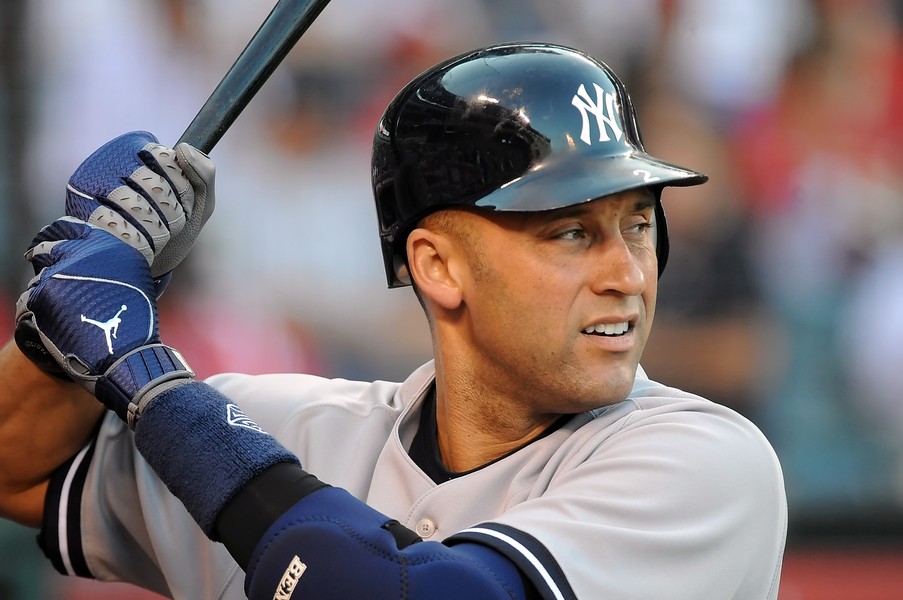
Around baseball in the US, David Ortiz is farewelling each stadium in which he plays his final season. Like Derek Jeter in 2014, and so many others before him, his era in Boston with the Red Sox is ending in honour parades, accolades and historic applause throughout the Major League.

The Republicans in the US are hoping that their presidential candidate Donald Trump will be able to end the era of US President Barack Obama and level his chosen successor Hillary Rodham Clinton in a finals flurry on Tuesday 8 November. The election seems to be just around the corner and we are hoping so, since the process involving jockeying and positioning and finally the primaries which began only about 10 months ago seems interminable.

Eras come and eras go. As do fashions. As do blogs. As do years. Tonight ends 5776, the Jewish year in which we saw the end of the blood moons razzle-dazzle, and the shemitah noises. What else happened the last 12 months? A stabbing and car-ramming epidemic in Israel that some called a third intifada was among the most dominant Jewish stories of the past year. But 5776 was also notable for the release of spy Jonathan Pollard after 30 years in prison, the communal fallout from the Iran nuclear deal, a historic (and unfinished) agreement on egalitarian worship at the Western Wall and continuing clashes between pro-Israel students and the BDS movement on college campuses.

More events: Pope Francis meets Jewish leaders in Rome to mark the 50th anniversary of the Nostra Aetate, the landmark declaration that rejected collective Jewish guilt for the killing of Christ and paved the way for improved Jewish-Catholic relations. In the meeting in St. Peter's Square, Francis declares: "Yes to the rediscovery of the Jewish roots of Christianity. No to anti-Semitism.” Also The United Nations recognised Yom Kippur as an official holiday. Sen. Bernie Sanders won several primaries including his first one, the New Hampshire primary, becoming the first Jewish candidate in American history to win a presidential primary.

End of life is really end of an era as since last Rosh Hashanah (Jewish new year) these Jews died: Fyvush Finkel, an Emmy Award-winning actor, Shimon Peres, the former Prime Minister and President of Israel, Gary Shandling, Esther Jungreis, a pioneer in the Jewish outreach movement, and Gene Wilder.

Last year as Rosh Hashanah approached, author Sandra Teplinsky wrote in Charisma Magazine, "At this season of tetrad blood moons, a completed Shemitah, and exponentially escalating sin, of this we can be sure: God is trumpeting a love call to give heed to Him and His ways. To those who respond, He will give grace to receive new grace. He will empower them to boldly withstand and shift some of the ways of the world in the year ahead. Kingdom conflict will intensify, as the Scriptures say it must. But that's because the King Himself is coming. My prayer is that in 5776 He'll come powerfully through each of us. This year, may the shofar's trumpet draw you deeper into His kingdom goodness and glory!"

That was Sandra's word last year. Every era has a beginning; every era has an ending. What will you do with 5777? What will you do in your era? Will you live your life for the living God? Will you consider how to make the world a better place this year, this week, tonight?

Will you get to know the Lord? Will you?

03 September 2016

Always on time


I remember my friend Steve and I prayed for God's direction. We believed we were supposed to start a new ministry there in Lawrence, Kansas, but as young men, and as young believers, we were not 100% sure. We asked the Lord in prayer for assurance, for confirmation, for a sort-of guarantee that we were hearing correctly. Our prayer was hopeful, but not powerful. Just a plea or two from children to their dad. I remember praying something like, "If this ministry (which would eventually become the Mustard Seed Church) is of you, please confirm this with a little bit of money."

We wanted to start a house (commune) ministry like the House of Agape in Kansas City. We wanted God to help us in our venture. It would be a place for young people, hippies, druggies, socially rejected folks, to find the Living God. That was our hope.

The next day Steve went to his mailbox and found a notification of a transfer of some funds from a relative to him. The amount of the transfer was not clear to him, so he rang the bank and found out the amount was upwards of $20,000. What?!! For Steve, then 21, to receive this information was clear. He knew this money was obviously the answer to our prayer from the day before. But wait a minute, the letter had already been sent a few days earlier than this moment in March 1972. Was this really an answer to our prayer? I mean, we hadn't even prayed yet when the sender, no doubt a clerk at a financial facility, had put the stamp on it and sent it through the mail system. The question remains... can God answer a prayer before it is even asked?

This week I was in Singapore and was at Changi Airport after a successful weekend of ministry. I was really tired and awaiting my flight home to Sydney. In a nearby seat in the airline lounge, I saw an Asian man obviously upset. He was feverishly looking through his backpack, taking item by item out and turning with worry at each removal. What could be wrong? I decided to go see if I could help.

Daisake is from Japan, and had been in Vietnam. He flew from Ho Chi Minh City and arrived into his transit city of Singapore a couple hours previously. It was now time for his onward flight to India, and now he couldn't find his passport. Oh no, that's not good.

The agent at the lounge also came to him. We asked where he had been. Had he been wearing a jacket? Had he used the restroom? I went there to check. Nothing. I looked under the chairs in which he had sat. Nothing. The agent at the lounge recommended we go to the info area, so he and I went to the information booth downstairs. I urged him to cut into the long queue because his was an emergency. I apologised to the folks in the queue as he cut in. No one really minded. They understood it seemed like an emergency.

I took a photo of him and the agent. I sent it onto Instagram and Facebook on my feeds. I asked people there to pray for him. They who read that post didn't know him. They didn't know the situation. I said, "Please pray right now for daisake from Vietnam who lost his passport" Nothing more. And people responded. Prayers went up from around the globe. I showed Daisake the posts, and told him that I was a minister. I told him that I had asked my followers to pray for him. He was amazed.

But no help from the pictured agent. We speed walked to the Singapore Airlines help desk another 400 metres away. Again we cut in line. And again no dramas from the others. He was so upset and the time was fast diminishing for his flight to depart. They had already been boarding at the gate for 40 minutes. Could the agent help? She was very helpful and considerate, but I wondered if anything could be done. This is when a copy of a passport that a person carries with him (a good bit of advice from me) would have helped in such a case. But Daisake didn't have such.

Then, for no apparent reason, the agent rang again to the boarding gate. The agent upstairs had done that 30 minutes earlier. She told the agent there of his situation, and amazingly the agent there said, "We have his passport. It was turned in. Have him hurry."

WHAT!?! Wow, no time to say a long'goodbye' and only a chance to celebrate the mercies of God and for me to know whom to thank. It was the prayer warriors worldwide who instantly joined me and him, and the person who found and turned in his passport. Oh, and the Living God who ever looks out on His creation and cares for us in our smallest and largest concerns. "Hallelujah!" I said. And "Hallelujah" Daisake said.

God is always on time. And yes, sometimes the answer is sent even before you pray. Wow, the God of eternity can answer an as-yet-unasked prayer since He sees the beginning from the end.(Isaiah 46.10)

There are biblical stories that remind me of this truth as well. The children of Israel escaping slavery in Egypt at just the right time, the prophet Samuel approaching King Saul at the right time, Yeshua arriving at the shiva-sitting household of his friend Eliezer (Lazarus) and miraculously raising him from the death. God's time is not ours; He has a different schedule than we do. But His timing is always right.

One day near the Feast of Tabernacles (Booths), Sukkoth, His own younger brothers challenged Yeshua to go up and perform some miracles to garner either sympathy or to recruit more followers. The scene is here:
"Now the feast of the Jews, the Feast of Booths, was near. Therefore His brothers said to Him, “Leave here and go into Judea, so that Your disciples also may see Your works which You are doing. For no one does anything in secret when he himself seeks to be known publicly. If You do these things, show Yourself to the world.” For not even His brothers were believing in Him.
So Jesus said to them, “My time is not yet here, but your time is always opportune.The world cannot hate you, but it hates Me because I testify of it, that its deeds are evil. Go up to the feast yourselves; I do not go up to this feast because My time has not yet fully come.”Having said these things to them, He stayed in Galilee.
But when His brothers had gone up to the feast, then He Himself also went up, not publicly, but as if, in secret." (recorded in John 7.2-10)

God's timing is perfect. It isn't your timing. Be patient. Wait on the Lord.

The Jewish prophet Habakkuk wrote in chapter 2:3 “For still the vision awaits its appointed time; it hastens to the end—it will not lie. If it seems slow, wait for it; it will surely come; it will not delay.”

Peter also understood this in his letter he wrote, "The Lord is not slow about His promise, as some count slowness, but is patient toward you, not wishing for any to perish but for all to come to repentance." (2 Peter 3.9) God's love is real and worth awaiting. And worth receiving.

Paul quotes the prophet Isaiah, "AT THE ACCEPTABLE TIME I LISTENED TO YOU,
AND ON THE DAY OF SALVATION I HELPED YOU.”
Behold, now is “THE ACCEPTABLE TIME,” behold, now is “THE DAY OF SALVATION” (2 Corinthians 6.2)

"Thus says the LORD, “In a favourable time I have answered You, And in a day of salvation I have helped You; And I will keep You and give You for a covenant of the people, To restore the land, to make them inherit the desolate heritages;" (Isaiah 49.8)

Dear friend, if you aren't already a believer in Yeshua, now is your day. Receive His love and care. Say "yes" to Yeshua. He died for you. He rose from the dead. He is returning to His own. Be one of His. Your time is now.

Where were you on...?

Today in history is 7 October. Perhaps you remember attending a friend's birthday party or watching a game of the World Series. For some...